
The owner-operator seeking to raise under USD 100M for mining or oil & gas projects in Latin America or Africa from US accredited investors should adopt a practical fundraising approach.
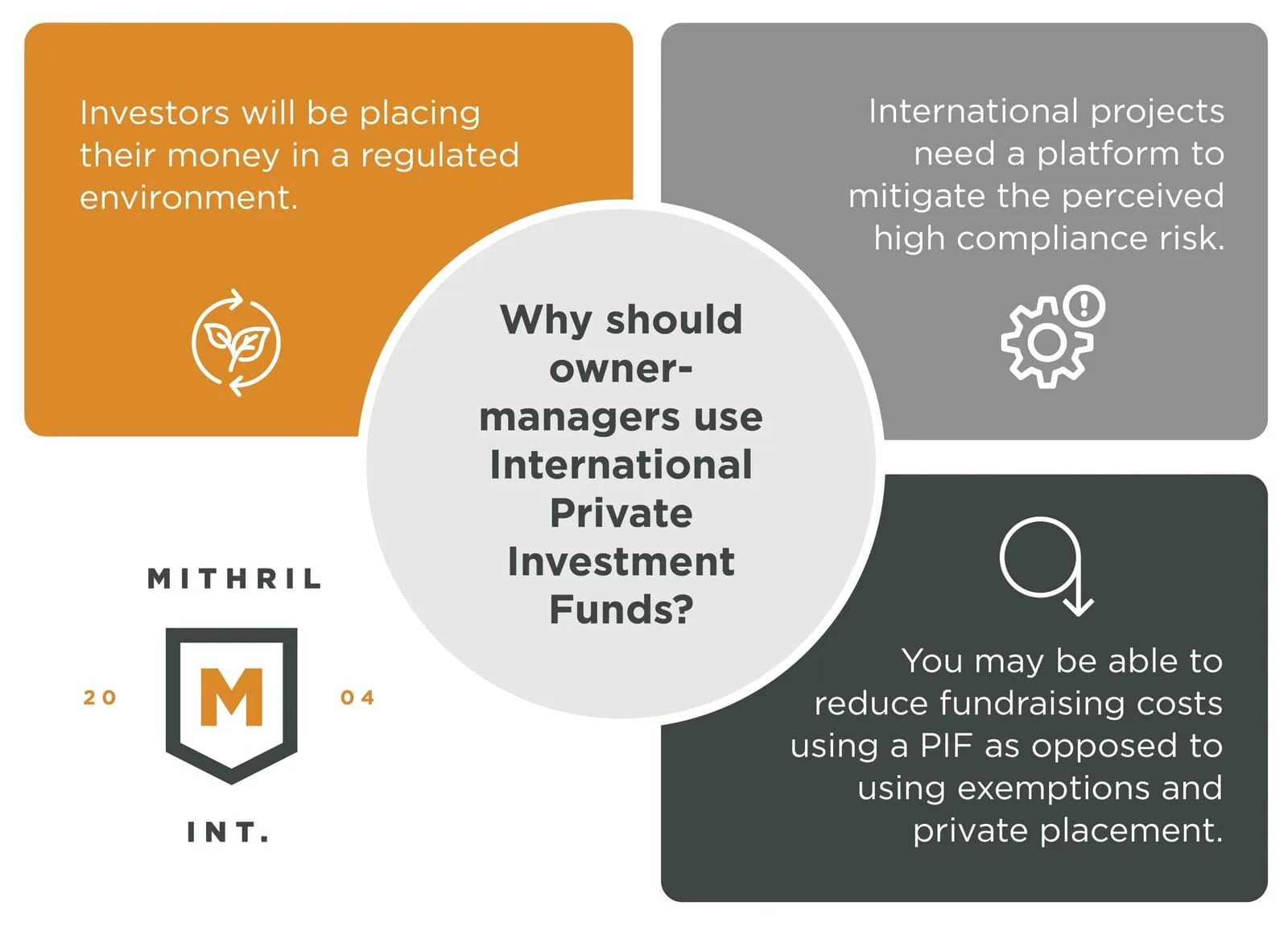
Why owner-managers should use international PIFs
1. Regulated investors and regulated money. Most accredited investors maintain custody with US or other private banks. Since institutions and large financial firms lack cost-effective structures for small projects, your investment structure must also be regulated. Your private operational company needs ownership by a Private Investment Fund. Investors then purchase shares in your regulated Private Investment Fund.
2. International compliance risk. Projects raising under USD 100M require a regulated Private Investment Fund to attract US investors. Private banks' compliance departments view unregulated environments as high compliance risk, particularly for internationally-based projects outside continental USA.
3. International private placement or Private Investment Fund? Owner-managers should arrange for a regulated fund manager even when running international private placements exempt from regulation. International Private Investment Funds are better for owner-managers.
How to set up and operate an international PIF
- Engage US securities counsel.
- Establish a regulated fund manager.
- Establish the fund in Ireland, Barbados, or Luxembourg.
- Use Reg D 506(c).
Expected outcomes:
- Directors and shareholders can promote US investments.
- Accredited investors can invest due to low compliance risk.
- Captive insurance strategies can further reduce international risk.
Choosing a regulated fund manager
When owner-managers establish LPs/GPs with investors and projects in different jurisdictions, a regulated fund manager becomes necessary for fund regulation, enabling accredited investor participation.
To market funds to USA investors, the General Partner or management company must be SEC-regulated. Common approaches include licensing as fund manager, asset manager, or alternative investment fund manager in jurisdictions like Barbados, Ireland, or Luxembourg; jurisdictions with regulatory regimes the SEC recognises as equivalent.
Alternatively, establish a US-based SEC-registered fund management company, but this proves more complicated and expensive. Most owner-managers prefer the regulated fund manager route.
Selection criteria for regulated fund managers
- Licensed in an SEC-recognised jurisdiction.
- Experience managing international Private Investment Funds.
- Strong understanding of US securities laws.
- Demonstrated performance track record or operational capability.
Fund manager selection by jurisdiction
London, United Kingdom
AIFs target larger funds. Finding available managers focused on projects under USD 100M proves challenging without existing UK connections. Deep research is essential before committing to a partnership.
BVI Approved Manager
Licensed asset managers can oversee up to USD 400M. A BVI Asset Manager can become tax-resident elsewhere if the majority of directors are tax residents there, operating under those regulatory authorities' permission. A US-based BVI-approved manager likely operates under SEC exemption.
Irish fund manager
Ireland remains in the EU. Tax-resident Irish funds provide access to excellent international tax networks, especially with international financing arrangements.
Canadian asset manager
Canada hosts many boutique, internationally-capable asset managers with strong oil & gas and mining expertise. Many work with owner-managed projects despite an institutional focus. Managers regulated by Canadian Securities Administrators can market to US investors while offering familiar protections.
Look for Canadian asset managers that:
- Are regulated by Canadian Securities Administrators.
- Have project-type experience.
- Know your project jurisdictions.
- Are boutique and internationally capable.
- Have commercial oil & gas and mining capabilities.
Private bank or merchant bank
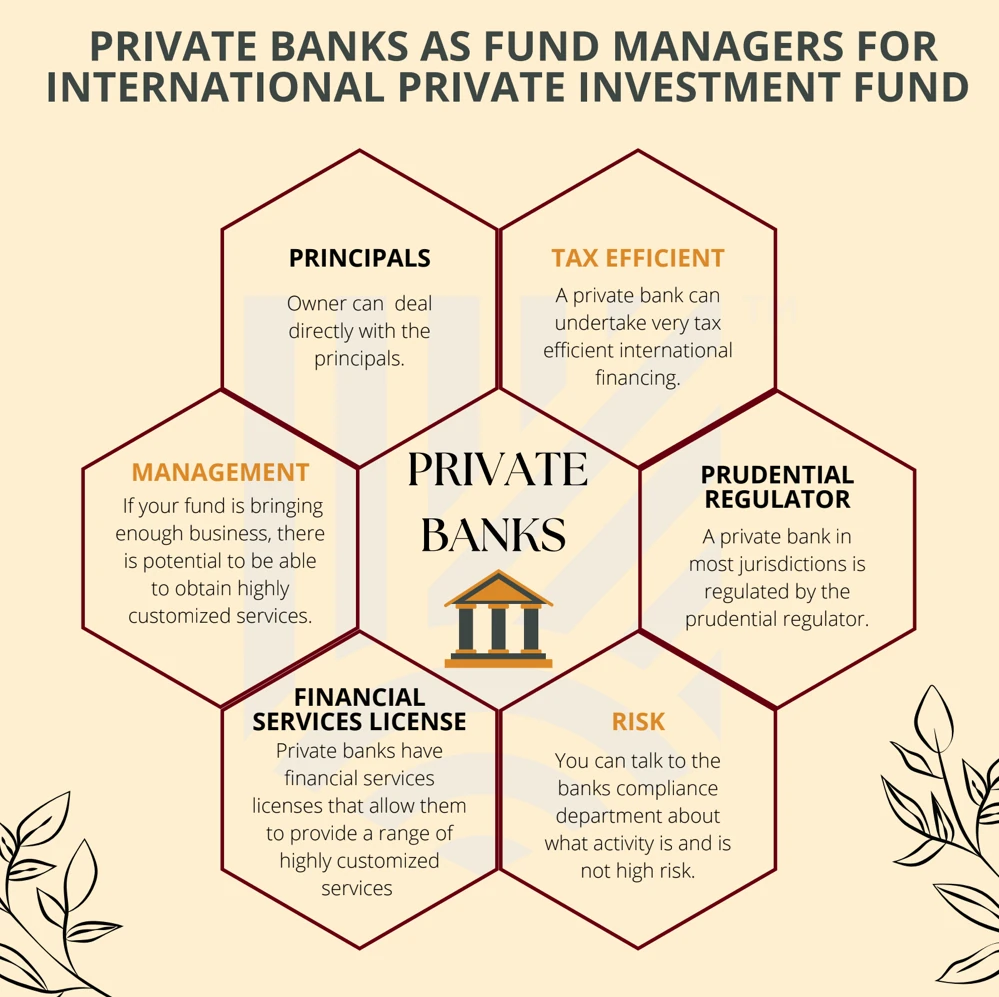
Owner-managers increasingly require international structures for international business and investment. Merchant banks and boutique private banks best serve these arrangements.
Large national institutions, such as Bank of America and Wells Fargo, have largely exited non-US international private client services. Owner-managers find increasing service limitations with large institutions for non-standard international arrangements.
Small merchant banks run by principals offer advantages:
- Direct owner-principal contact.
- Tax-efficient international financing capabilities.
- Prudential regulator oversight (the highest regulatory standard).
- Compliance department consultation on risk assessment.
- Financial services licences enabling customised solutions (back-to-back loans, escrow, custody).
- Potential for highly personalised services with sufficient fund business.
Selection criteria for merchant or private banks
- Location in an international financial centre.
- Experience managing international structures and investments.
- Strong reputation and regulatory standing.
- Full banking service offerings: investment banking, wealth management, private banking.
Merchant banks and trust companies best serve owner-managers needing international structures. Their experience, reputation, and regulatory oversight ensure comprehensive banking services safely and securely.
As international finance grows more complex, partnering with knowledgeable entities matters. Private banks subject to prudential regulation and compliance ensure investor capital safety and maintain high conduct standards.